The Feelings We Don't Always Know How to Say: Amritha Jain's My Inner Thoughts explores love, loss, motherhood and the quiet complexities of being human
 BMRD
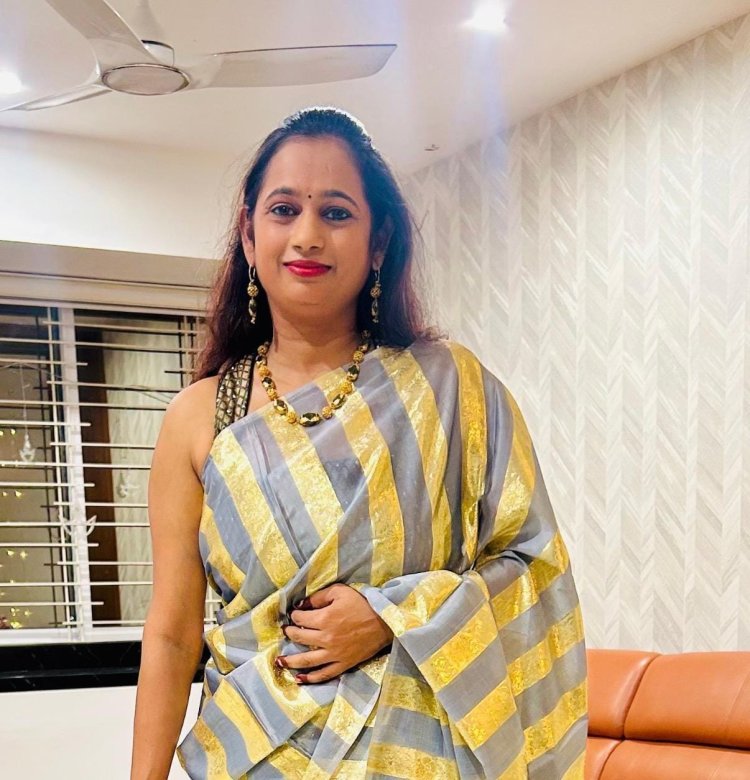
Some feelings arrive without words. Some stay with us long after a conversation ends. And some are hidden so deeply that we barely admit them to ourselves.
It is in this space between what we feel and what we express that Author Amritha Jain finds her poetry.
The author of My Inner Thoughts, Jain writes about the emotional experiences that shape our lives: love and loss, relationships and expectations, motherhood, healing, self-discovery and the difficult, beautiful process of understanding ourselves. Her poems emerge from the ordinary moments that leave an extraordinary imprint, the memories we revisit, the feelings we struggle to explain, and the truths we sometimes find easier to write than to speak.
For Jain, poetry is not about making emotions sound beautiful. It is about allowing them to be honest.
Writing as a woman, a mother and an observer of everyday life, she explores the contradictions that make us human. We can love someone and still feel hurt by them. We can be grateful for our lives and still long for something more. We can appear perfectly fine to the world while carrying an entire conversation within ourselves.
My Inner Thoughts makes room for these seemingly conflicting feelings without insisting that every experience must end in a lesson or every wound in a revelation.
Writing under the identity WordsByAari, Author Jain brings a personal, reflective voice to contemporary poetry. Her approach favours emotional honesty and accessible language, allowing readers to find their own experiences within the words.
In this conversation, she reflects on the stories behind her poetry, the role of personal experiences in her writing, and why sometimes the simplest words are the ones that stay with us.
1. What inspired you to write My Inner Thoughts?
I think the book grew out of the many things we feel but don't always know how to express. There are emotions we discuss openly, and then there are those we tuck away because they seem too complicated, too uncomfortable or too difficult to explain.
I have always been drawn to that second space.
My writing comes from life, from relationships, memories, motherhood, love, loss and the little moments that make us stop and think. Sometimes, a feeling stays with me until I find a way to put it into words.
My Inner Thoughts brings together those reflections. I wanted to write about emotions as they are, not necessarily as we think they should be. If a reader finds a thought in my book that they have carried silently for years, and feels a little less alone because of it, then the book has done something meaningful.
2. Your poetry explores both tenderness and uncomfortable truths. How do you approach such varied emotions?
I don't believe we are made up of only the emotions we are comfortable admitting.
We can feel love and resentment, happiness and uncertainty, gratitude and exhaustion, sometimes all within the same day. Yet we often feel the need to present only one version of ourselves to the world.
I am interested in the full picture.
Some of my poems are gentle and reflective. Others are more direct because the emotion demands it. I don't begin by deciding whether a poem should be comforting or confronting. I begin with what I want to say and allow the feeling to determine the words.
I also don't believe every difficult emotion needs to be transformed into a positive message. Sometimes, acknowledging what we feel is enough. Not everything needs a silver lining.
3. How have your experiences as a woman and a mother influenced your writing?
Life has given me many identities to inhabit. I am a woman, a mother, a partner, a daughter and an individual who continues to discover herself along the way. Each role brings its own joys, expectations, responsibilities and contradictions.
Motherhood, in particular, has made me more attentive to the emotions that exist alongside love. There is tenderness, but there is also exhaustion. There is immense joy, but there are moments when you miss the person you were before everyone needed a piece of you.
I think these experiences have made me more observant, both of myself and of the people around me.
Not every poem is autobiographical, but my emotional experiences inevitably influence the way I see the world. I write about what moves me, what unsettles me, what I question and what I am still trying to understand.
4. Your writing uses simple language rather than elaborate poetic devices. Is that a conscious choice?
Yes, because I don't want the language to stand between the reader and the emotion.
I believe a feeling can be powerful without being dressed up in complicated words. Sometimes, the simplest sentence is the hardest one to forget because it says exactly what we have been trying to articulate.
I pay attention to rhythm, pauses, repetition and the way a poem sounds when read aloud. But I don't believe every poem needs to rhyme or follow a particular structure.
For me, the emotion comes first. The words have to serve it, not overshadow it.
I would rather write a line that feels true than one that sounds impressive but says very little.
5. Poetry allows readers to interpret a piece in their own way. How important is that freedom to you?
It is one of the things I love most about poetry.
I might write about a particular person, relationship or memory, but a reader may find an entirely different connection in those words. A poem about loss might remind someone of a person they miss. A poem about a relationship might bring back a conversation they never had the courage to finish.
I don't want to dictate what someone should feel or what they should take away from my writing.
When I write, I am expressing something personal. When someone reads it, they bring their own life to it. Somewhere between those two experiences, a connection forms.
And that connection doesn't have to look the same for everyone.
6. What role do you believe poetry can play in our everyday lives?
I think poetry can help us pay attention to ourselves.
We spend so much of our time responding to the demands of everyday life that we don't always pause to understand what is happening within us. We fulfil responsibilities, maintain relationships and carry on, sometimes without asking ourselves how we are actually feeling.
Poetry creates a little space for that conversation.
It can help us acknowledge something we have been avoiding, revisit something we haven't fully processed or simply recognise that an emotion we thought was ours alone is actually shared by many others.
I don't see poetry as a solution to every problem. I see it as a way of making room for our experiences, including the ones we haven't quite figured out yet.
7. What do you hope readers take away from My Inner Thoughts?
I hope readers find something familiar in its pages. A thought they have had but never expressed. A feeling they have struggled to explain. A memory that makes them pause.
I don't expect every poem to resonate with every reader, and I don't think it needs to.
But I hope that somewhere in the book, someone encounters a line that makes them feel understood. Perhaps it gives them the words for something they have been carrying. Perhaps it simply reminds them that other people experience similar uncertainties, contradictions and emotions.
We don't always need someone to tell us how to feel better. Sometimes, we need someone to acknowledge how we feel in the first place.
That is what I hope my poetry offers: an honest moment of recognition.
Beyond the pages
With My Inner Thoughts, Author Amritha Jain invites readers to slow down and listen to the quieter parts of their own lives. Her poetry explores the emotional spaces between love and loss, expectations and acceptance, and the people we are expected to be and the people we are still becoming.
It is an invitation to reflect, to recognise and, perhaps, to find words for feelings that have remained unspoken.
Order your copy of My Inner Thoughts by Author Amritha Jain on Amazon today and discover the thoughts, emotions, and reflections that unfold within its pages.