Author Dr. Infini Lionne on Poetry, Emotion, and Self-Discovery: Inside Liber, Libera, Liberum
 BMRD
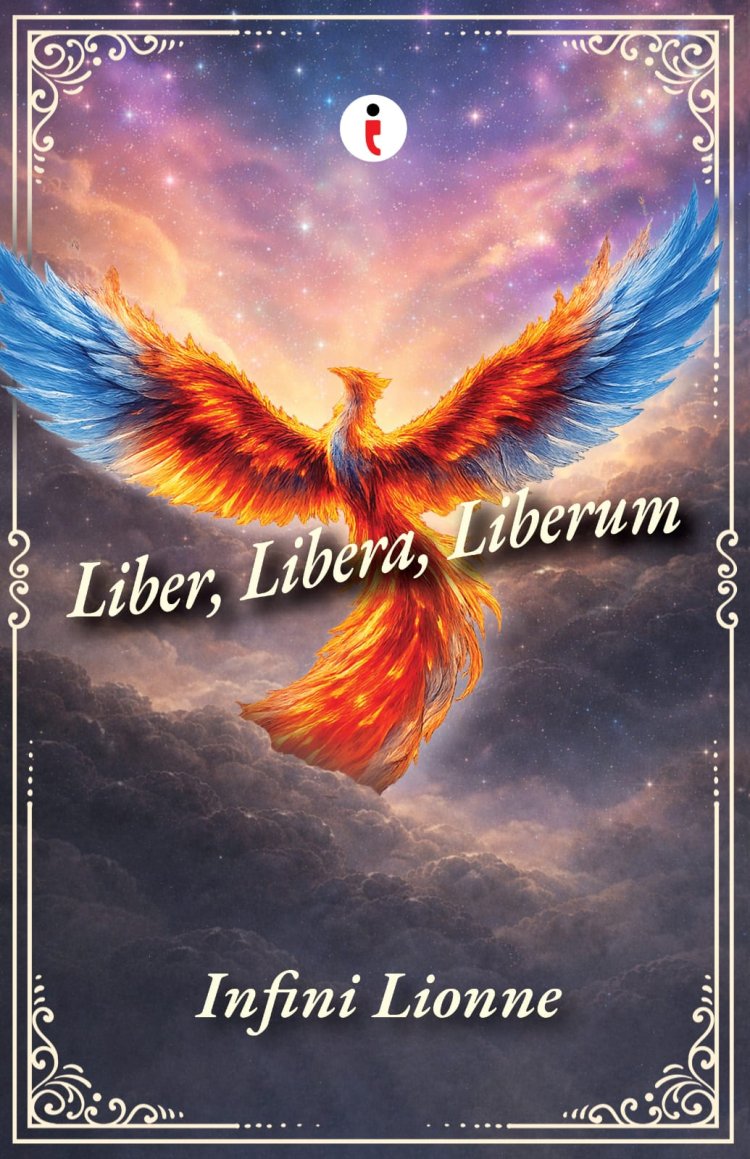
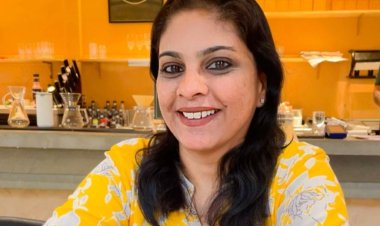
Poetry can become a powerful outlet for emotions, personal reflection, and self-discovery. For Dr. Infini Lionne, a medical professional and passionate poet, writing is an instinctive process shaped by introspection, observation, and the experiences of everyday life.
In her poetry collection Liber, Libera, Liberum, she invites readers to explore love, longing, hope, heartbreak, resilience, and the many emotions that shape the human experience. In this interview, Dr. Lionne discusses her relationship with poetry, her creative process, the influence of her personal journey, and the role of reflection in her writing.
1. What draws you to the medium of poetry, and how do you believe it offers a distinctive way to communicate emotions and ideas?
Quite often, my fingers seem to hover over the keyboard… My mind, absolutely blank as if no thought was there in the first place… And then, there are all those other times when blatant mutiny will break out hampering my emotional constraints to the point when I may feel like breaking objects just to sate whatever feels wrong or extremely odd… Over the course of my academic pursuits, growing up through this field especially, mental breakdowns were frequently innumerous. It were during these moments that the only feasible outlet seemed with either pen and paper or through my notes app on cellphone. One minute, flood will break out and the very next I will end up releasing all pent up anxiety out onto a blank sheet through words. The instant the poem is complete, my brain would resume its blank stance and there would be nothing left except a period of calm. That was what poetry was for me initially, my personal therapist. In a flow it would come and stay, the end result? A beautiful stream of verses which when later read would produce phenomenal effect.
2. Can you share the inspiration behind the theme of your poems, and how it influenced the tone and structure of it?
Like I mentioned before, there was never any true intention to anything, ever. It was just something which naturally flowed… Of course, there were times when i would be simply incapacitated and no words could be framed at all… But, the other countless times when i Would find myself in the ‘ZONE’, something would ensue and thoughts would randomly and chaotically be transformed into verses or stanzas. Again.. No intention or direction would have been decided and some end result would be produced landing up as an unintended theme… Ironically it would be my own state of mind that would have been captured at the time of composing but to the reader a very different interpretation might suggest something entirely new.
3. Poetry often invites readers to interpret and connect on a personal level. How do you navigate the balance between conveying your intended meaning and leaving room for individual interpretation?
For me this entire process is a personal venture, while composing I don’t think about the outside world… How can I!? If I thought what anyone would say or think at the time of jotting down my feelings and emotions, how would I honestly express myself at all!? I’ll simply end up being as curt and restrained as anyone would normally be externally, which would lose the entire purpose as to why i started writing in the first place… Of course, the journey undertaken by me will be more or less similar to most other individuals. Likewise, the thoughts and emotions ongoing in my system may not be that different either… So, when I am penning them down; I might indeed be expressing what multiple other people may be feeling simultaneously or at different instances in time; Thereby, emitting a very relatable tale for the onlookers…
4. Can you describe your approach to crafting the musicality of your language, and how it contributes to the overall experience for readers?
My composing style doesn’t have any classic base or any literary expertise, neither was I ever trained in sonnets, limericks or Shakespearan styles… Infact, more often I don’t even realise what pattern my poetry ends up following… I just keep on typing or writing, framing sentences which somehow linguistically become free verses… I don’t necessarily plan for my words to be decorative either, it just somehow becomes that given the vocabulary I tend to use.
5. Many poets draw inspiration from their own experiences. How does your personal journey and background influence the themes and imagery in your poetry?
Almost at every juncture in my life, irrespective of what course I might have been pursuing during that time, I have created a poetry; Sometimes, the spark would create a poetry/day for a week and sometimes there would be a period of extended drought in my routine.. But almost every year, be it in childhood, through teenage or during my adulthood; I have expressed myself with the help of words and notes… It is as if, if I am breathing I have to create a literary something… That’s the only skill i possess anyhow atleast in english language. I don’t possess artistic talents like my cousin neither am I very intelligent or vocal like my parents. I am pretty average as it is so this modality is the only one that suffices. If at all I want to describe a scenery, the sketch or painting I would produce would be like a blob of colours not making any sense but if i were to write, atleast other artists will be able to grasp at what my brain visualised.
6. In your work, how do you use poetry as a means of commentary or reflection on the world around you?
Basically poetic lingo is how I verbalize almost anything that I need to articulate. To the point way of writing is harder for someone like me. My way of interpreting things is very subjective not objective. So, I end up beating around the bush before arriving at the actual point of discussion. But, then, I am a torrential overthinker. I practically see things, let them emulate any thoughts in my head and when I need to siphon it out of my system, I express through poetry.. So, whatever theme it may have been becomes a sort of poetry disguised as a plain narrative.
7. Readers may be curious about your writing rituals. Can you share any specific routines or practices you find helpful in cultivating your creativity and honing your craft as a poet?
Since, this is the most straightforward question, I’ll try to be as ‘to the point’ as it is possible for me to be. Days when I completely silent my system, helps, doing something very similar to meditation for example. Spending time with myself completely for a few hours, keeping my mind blank without letting any worry or work stress enter. It is these few times, even while walking towards my department, the brief 15 minutes i get with myself, I will shut my brain completely and observe the nature. By the time, I reach my workplace, my mind will be calm enough to do the rest of the day’s work and during free times if left alone, phrase out few write ups too. This way, I also finetune my thesis nowadays. Apart from that, years of years of reading novels, building my vocabulary proved essential towards giving me this forte at composing. Nowadays, I don’t get time for novels but that thrill at seeing a library and bookstore and bad habit of bookhoarding is still there. Because of this intermittent time of brief meditation followed by introspection and talking with my own self, my skills stay intact. The only problem is sometimes while walking I will end up musing in my head few words and thoughts, creating a beautiful poetry but because I won’t pen it down anywhere, I shall lose track of it later. In that way improvisation still works, because if I sit again something different but equally beautiful will pop out. But, the exact same feeling and exact same verse doesn’t return if it is expressed once, in a poetic format.
About the Author
Dr. Infini Lionne is a medical professional and passionate poet with a deep love for literature. An avid reader, she explores themes of emotion, resilience, and self-reflection through her writing. She is the author of Reminiscent Reticence, published by BookLeaf Publishing, and a co-author of the anthology Many Minds, One Voice. Her work has earned her the Emily Dickinson Award and the Best Poetry (Emotional Awareness) Award 2025 from Legacy of Literature and Literature Times. Balancing medicine with her literary pursuits, she continues to write while working on future manuscripts that inspire and connect with readers.
Discover Liber, Libera, Liberum by Dr. Infini Lionne and experience a poetry collection that invites reflection on emotions, relationships, resilience, and self-discovery.
Buy Liber, Libera, Liberum on Amazon today and take a moment to reconnect with the thoughts and feelings that make each human journey unique.